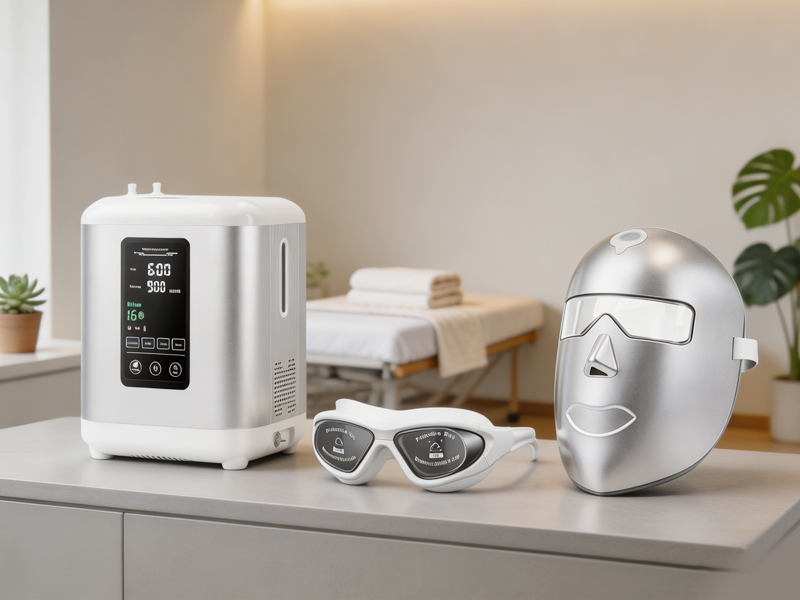
As demand for hydrogen technology continues to grow, more distributors, wellness equipment suppliers, private-label brands, and project buyers are exploring hydrogen-related products for their local markets. Among these products, Smart Hydrogen-Oxygen Machines have attracted increasing attention because they combine hydrogen and oxygen generation with intelligent controls and flexible product configurations.
For overseas buyers, however, selecting the right machine involves much more than comparing appearance or price. Gas generation technology, flow configuration, product structure, electrical standards, customization options, quality control, and supplier engineering capabilities can all affect whether a product is suitable for your market.
This guide explains the key points B2B buyers should consider when sourcing Smart Hydrogen-Oxygen Machines and planning OEM, ODM, or customized projects.
1. Understanding Smart Hydrogen-Oxygen Machines
Smart Hydrogen-Oxygen Machines are designed to generate hydrogen and oxygen through water electrolysis. Depending on the product design and intended application, different models may vary in gas flow, operating controls, internal structure, display interface, size, and other functional configurations.
For B2B buyers, the word “smart” is especially important. A modern hydrogen-oxygen machine is not simply a hydrogen generation unit. Buyers may also consider features such as digital displays, operating timers, flow information, intelligent control systems, user-friendly interfaces, and other electronic functions.
The appropriate configuration depends on the target market and project requirements.
For example, a distributor serving the home-use market may prioritize compact dimensions, simple controls, attractive appearance, and convenient operation. A professional project buyer may focus more on gas output, internal configuration, continuous operation requirements, engineering compatibility, and customization.
Before requesting a quotation, buyers should therefore clearly define where and how the product is expected to be used.
2. Why SPE/PEM Technology Matters
The hydrogen generation system is one of the most important parts of the machine.
SG focuses on hydrogen technology products based on SPE/PEM water electrolysis technology. In simple terms, the system uses purified water and an electrolysis process to generate hydrogen, forming the technical foundation of products such as hydrogen-oxygen machines and other hydrogen generation equipment.
For overseas buyers, the PEM-related system should not be treated as just another specification on a product sheet. It can influence the overall product architecture and needs to be considered together with gas output, electrical controls, thermal management, water-related components, and the intended operating environment.
When evaluating a supplier, buyers can ask questions such as:
What PEM or electrolysis configuration is used? What gas-flow options are available? What water requirements should be followed? How is the product tested before shipment? Can the configuration be adjusted for a specific project?
These questions help buyers move beyond basic price comparison and understand whether a supplier has the engineering capability to support the project after an initial sample order.
3. Choose the Right Configuration for Your Target Market
There is rarely one Smart Hydrogen-Oxygen Machine that fits every buyer.
A wholesaler, private-label brand, clinic equipment distributor, wellness project contractor, and specialized hydrogen technology company may all require different product configurations.
That is why overseas buyers should begin by defining several basic requirements: target application, expected gas flow, product dimensions, preferred appearance, electrical standard, plug type, control functions, display requirements, accessories, packaging, and expected order quantity.
Local market conditions should also be considered.
A product intended for one country may require a different voltage or plug configuration from a product sold in another region. Buyers may also have different preferences regarding control interfaces, packaging languages, branding, accessories, or exterior design.
Instead of selecting a machine based only on the highest available specification, buyers should select a configuration that matches their actual sales channel and customer needs.
For B2B sourcing, a well-matched product is usually more valuable than an unnecessarily complex one.
4. OEM and ODM Customization Can Create Market Differentiation
For brands and distributors, customization is often one of the main reasons to work directly with a hydrogen equipment manufacturer rather than purchasing generic products through multiple trading channels.
Smart Hydrogen-Oxygen Machines can involve several levels of customization depending on the project.
Basic customization may include product color, logo, packaging, instructions, voltage, and plug options. More involved projects may require changes to the appearance, structure, dimensions, PCB functions, display interface, program functions, gas-flow configuration, accessories, or PEM-related components.
For projects requiring a more distinctive product, private-mold development may also be discussed.
SG supports OEM/ODM cooperation and project-based development, including communication around product concepts, structural requirements, sample development, engineering changes, and production preparation.
This flexibility is particularly useful for buyers who want to build a recognizable product line rather than compete only on price.
Before starting a custom project, however, both sides should confirm the scope carefully. Buyers should provide reference products, drawings, target specifications, branding requirements, expected quantity, and intended market whenever possible.
Clear information at the beginning can significantly reduce repeated revisions during development.
5. Evaluate the Supplier Beyond the Product Photos
Professional product images are useful, but they do not tell you everything about a supplier.
When sourcing Smart Hydrogen-Oxygen Machines, overseas buyers should also evaluate the supplier’s engineering and project-support capabilities.
A supplier that can discuss industrial design, structural engineering, electronics and PCB development, PEM electrolysis technology, assembly, testing, and sample validation is better positioned to support customized B2B projects.
This becomes especially important when a buyer needs more than an existing standard model.
For example, changing a housing design may affect internal space. Changing gas-flow requirements may involve additional engineering considerations. A new display interface may require electronic and program adjustments. Different accessories or electrical standards may also require verification before production.
Therefore, buyers should ask whether product development, assembly, testing, and quality-control processes can be coordinated directly by the supplier.
A strong B2B relationship depends not only on what is available today, but also on whether the supplier can respond when the project changes.
6. Start With Samples and Confirm Details Before Bulk Production
For new sourcing projects, sample evaluation is an important step.
A sample allows the buyer to review the physical product, appearance, controls, accessories, packaging, and relevant operating characteristics before committing to a larger order.
For customized Smart Hydrogen-Oxygen Machines, the process may require additional stages. Depending on the project, this can include requirement confirmation, concept discussion, structural development, sample preparation, testing, revisions, mold development, and final production confirmation.
Buyers should avoid approving mass production based only on images or verbal descriptions when significant customization is involved.
Instead, establish a clear confirmation process.
Important details such as logo position, product color, display content, voltage, plug, accessories, packaging, labeling, instructions, and agreed functions should be checked before production begins.
It is also useful to keep one approved specification or sample as the reference standard for subsequent production.
This approach helps both buyer and supplier work from the same requirements and reduces avoidable misunderstandings.
Choosing the Right Smart Hydrogen-Oxygen Machine Partner
Sourcing Smart Hydrogen-Oxygen Machines for an overseas market requires a balance between product technology, configuration, customization, quality control, and supplier support.
Rather than focusing only on unit price, B2B buyers should consider the complete project: What type of product does your market need? Which SPE/PEM configuration is appropriate? What functions should be customized? What electrical and branding requirements apply? Can the supplier support engineering changes, samples, testing, and future production?
SG specializes in hydrogen technology products based on SPE/PEM water electrolysis and supports standard products as well as OEM/ODM and customized hydrogen projects. By sharing your target application, required specifications, expected quantity, market, and customization requirements, you can begin with a clearer technical discussion and identify a more suitable solution for your business.